


Blog; Safe Team, Safe Deliveries with Dedicated Load Security Training

Written by:
Mentor FLT Training
. 9th September 2026
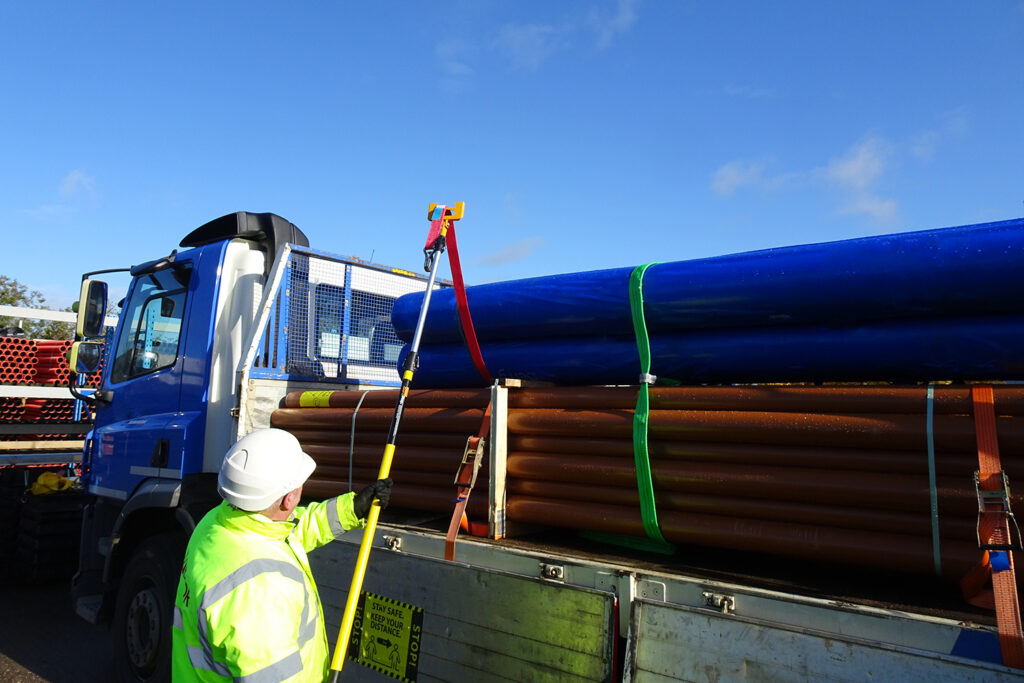
For hire businesses, getting the right equipment to the customer safely and on time is a fundamental part of the service. This relies on safe loading and securing processes being followed throughout the journey. From initial loading to selecting the correct restraints and carrying out final checks, there are several points at which things can go wrong, so it’s vital that everyone understands their role.
Poor load security can have serious consequences. Equipment can become damaged, loads can shift or fall from vehicles and, in the worst cases, other road users, drivers or members of the public can be put in danger.
So, as a hire business, how can you reduce the risk? It all starts with your people, and ensuring those responsible for loading, securing and transporting equipment have received the appropriate training to do so safely.
Don’t assume experience is enough
When recruiting someone who has previously worked for another hire company, or who has experience as a delivery driver, it can be tempting to assume that they already have the skills required. But what training have they actually received?
Experience is valuable, but it doesn’t necessarily demonstrate the correct level of competence. An individual may have been loading and securing deliveries for many years, or managing a team responsible for doing so, without having received any formal training. Alternatively, their previous role may have involved very different types of equipment, vehicles or securing methods to those used by your business.
This is particularly important for hire companies, where the range of equipment being transported can be widely varied.
A new employee may have considerable experience, but businesses should still establish what training they have completed, what equipment they have experience with and whether that training is still relevant to the role they are being asked to undertake today.
Put simply, don’t assume, check current skills for the job.
Train for the job
When planning load security training, to be effective, it needs to reflect the work being carried out.
Loading and securing equipment on a beavertail vehicle, for example, can present different considerations to a trailer with a tail lift. The wide range of plant and hire equipment available may also require different approaches to positioning and securing each for delivery.
Training should therefore give employees the knowledge and practical skills they need for the equipment and vehicles they will actually encounter.
This should include understanding how to select and use appropriate restraints, how equipment should be positioned, how securing points should be used and how to carry out appropriate checks before the vehicle leaves site.
Importantly, employees should understand why these steps are necessary, rather than simply following a procedure, enabling them to make better, safer decisions when faced with new scenarios.
Maintaining standards
Indeed, as things evolve, training shouldn’t be viewed as a one-off exercise that is completed when someone joins the business and then forgotten.
Equipment changes, vehicles change and employees may take on new responsibilities. Refresher training or reassessment may therefore be appropriate where there has been a significant change in working practices, equipment or an individual’s role.
As training occurs, businesses should also ensure that the related records are maintained, providing a clear audit trail of what employees have been trained to do.
This continual approach helps make sure that good load security practices remain part of the company’s wider safety culture, and are not left to the discretion of the individual driver.
Reduce the risk throughout the journey
Effective load security starts long before the vehicle leaves the depot and is a continual process until the day’s work is done. From plant loading and managers’ vehicle checks in branch, to maintaining safe transportation on the road, load security is essential, throughout the entire journey.
Failing to carry out this vital work correctly can have serious consequences. The DVSA encounters around 2,000 vehicles with insecure loads each year. These vehicles are prevented from continuing until the load is secured, often resulting in fixed penalties or driver prosecutions.
Providing appropriate training gives employees the knowledge and confidence to recognise hazards, select the right loading and securing methods and understand the importance of checking their work. For the business, it provides assurance that employees are equipped to carry out their responsibilities safely and keep operations running smoothly.
Ultimately, poor load security can have serious consequences, but you can reduce the risks by ensuring that those carrying out the work are sufficiently trained and competent.
While the right straps, securing equipment and anchor points are essential, they are only as effective as the people using them. Don’t assume competence. Check it, train for it, and keep it under continual review for a safe, end-to-end process.
Get in touch
Mentor Training, the UK’s leading provider of material handling equipment training, offers solutions for every stage of the loading and securing process, including specific courses for those working with plant equipment, beavertail vehicles and trailers with tail-lifts. Training is designed to ensure that vehicle loaders, drivers and managers all understand fundamental loading principles, in line with the latest DVSA guidance and all relevant legislation, for safety on site and on the road.
Mentor training programmes are available from HAE EHA. To find out more contact us on 0121 380 4617 or email training@hae.org.uk.