


News Item: Renta Tackles Rising Transport Costs Through Smarter Logistics
Nordic industry leader warns that rising delivery complexity, margin pressure and customer expectations are forcing hire companies to rethink logistics operations, and shares how a two-year digital transformation turned transport margins from negative to positive.
As equipment hire businesses across the UK and Europe face mounting pressure on margins, transport operations are rapidly becoming one of the industry’s biggest operational challenges.
That was the message from a recent industry discussion with Hire Association Europe (HAE EHA), Alrik, and Renta. Renta CEO Joacim Johansson described how rapid growth exposed serious weaknesses in traditional hire logistics operations, including manual dispatching, disconnected depot coordination and escalating transport costs.
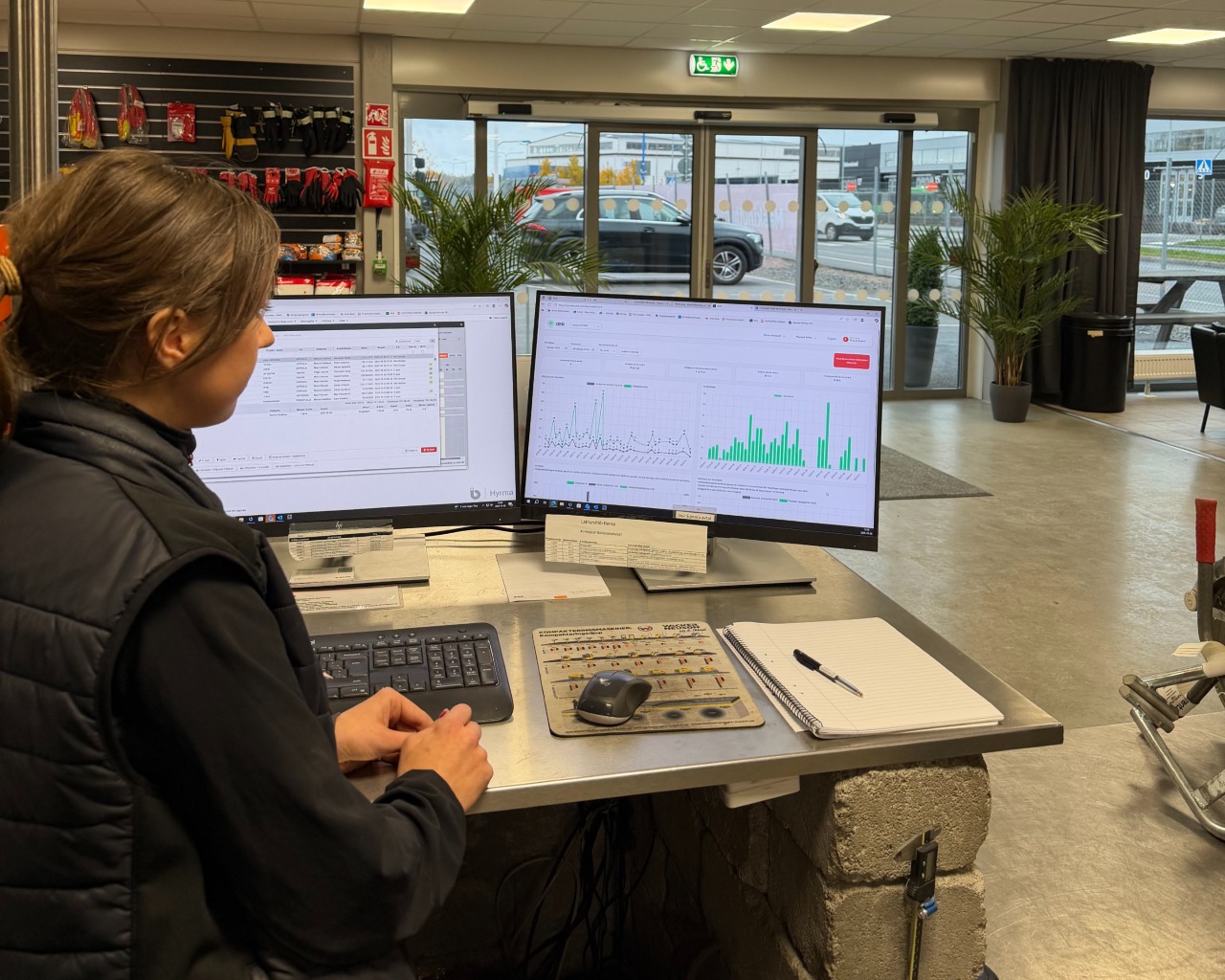
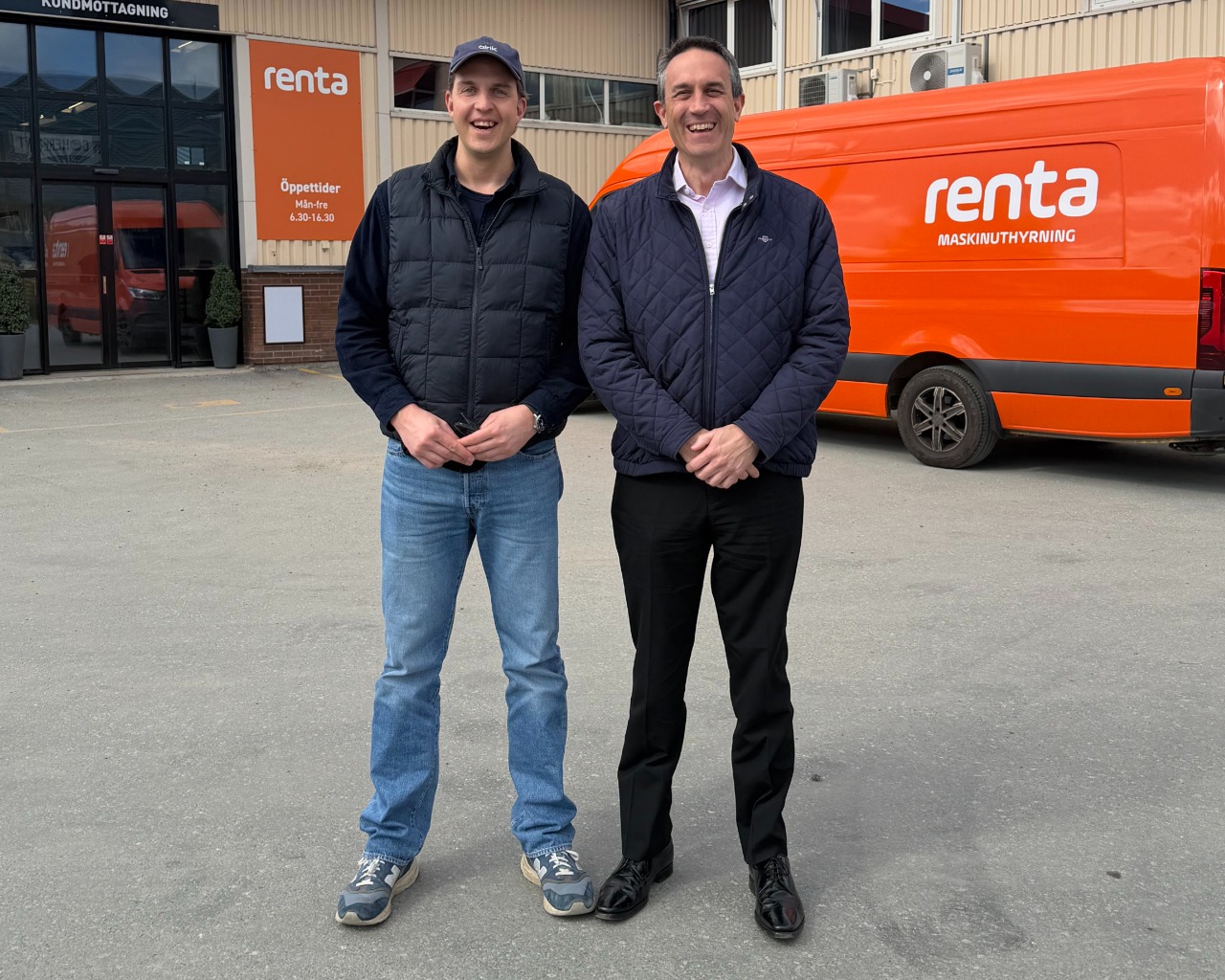
The discussion reflects a broader shift taking place across the European hire sector, where delivery operations are increasingly becoming central to profitability, utilisation and customer service performance.
Renta, Scandinavia’s largest equipment hire company, operates around 80 depots in Sweden and manages significant daily transport volumes across the country. According to Joacim, the company’s previous delivery operation became increasingly difficult to control as the business expanded.
Joacim said, “We were not managing. We did it the old-fashioned way with pen and paper. We sent truck drivers out manually, called all the orders in and out, and everything was handled through phone calls.”
The operational strain became particularly visible in Stockholm, where the company was coordinating around 20 delivery vehicles daily alongside 30 subcontracted transport providers.
Joacim continued, “We had equipment moving every second between depots without really knowing where the trucks were. Very often we saw our own trucks passing each other. One was picking up equipment while another was delivering to the same area. It was a mess.”
According to Joacim, the problem was not customer demand, but the growing operational cost of maintaining service levels as the business scaled.
“We kept adding more people just to maintain the same service level”, he explained. “Customer satisfaction was high, but transportation costs were going through the roof.”
The challenges outlined by Renta are increasingly familiar across the hire sector, particularly as businesses face labour shortages, fuel volatility, tighter margins and greater customer expectations around delivery reliability.
Neil Bravery, Commercial Director at Hire Association Europe, said many hire companies are still relying heavily on fragmented systems, depot-level coordination and manual planning processes.
Neil said, “There are still businesses comfortable with pen and paper because that is how they have always worked. But operational complexity is increasing all the time.”
The conversation highlighted how customer expectations around hire logistics are also changing rapidly, particularly on larger construction projects where delays and poor delivery coordination can have direct operational consequences on site.
Joacim said delivery performance has become a critical differentiator for hire companies competing in increasingly demanding markets. “The machines are the same across the industry. Service is key. We decided early that transport and quick deliveries had to become one of the things we focused on.”
Renta now provides customers with delivery updates and estimated arrival times via the Alrik platform, giving site teams clearer information around equipment movements and collections.
Joacim explained, “Customers know when we are coming, when the machine has arrived and when it has been collected. That removes uncertainty.”
For Nici Sundén Cullberg, founder and CEO of Alrik, the wider issue facing the sector is that many hire businesses are still trying to manage increasingly complex delivery operations using disconnected processes and reactive planning.
Nici said, “Hire companies have spent years focusing on fleet growth and depot expansion, but transport operations have often remained highly manual. The next operational gains in hire are likely to come from logistics, utilisation and transport efficiency.
“As hire businesses scale, knowing where equipment is moving, how vehicles are being used and how depots coordinate deliveries becomes operationally critical.”
The discussion also touched on increasing sustainability pressure across the sector, particularly around reducing unnecessary transport movements and improving carbon reporting capabilities. Renta is now the first hire operator in the Nordics able to provide customers with carbon emissions data for their deliveries directly through the Alrik platform.
Neil Bravery noted that transport-related emissions reporting is becoming increasingly important for UK hire companies involved in larger infrastructure projects and framework agreements.
Joacim said customers are already requesting more detailed reporting from suppliers. “That demand is increasing. Customers need that information for their own reporting and tender requirements. We are the first that can really give that to them today.”
Renta initially tested its transport planning approach across 12 depots in southern Sweden before rolling the system out across the wider business. According to Johansson, the biggest challenge was not technology implementation, but operational change management.
“People were sceptical in the beginning. They thought it would never work”, he said. “But after two or three months, they saw the benefits. Now they do not want to go back to pen and paper.”
Today all 80 depots use the Alrik platform daily, with transport margins having moved from materially negative to positive within two years of deployment.
Joacim concluded by saying, “We have improved the transportation margins quite significantly, from a really bad negative margin to a positive margin. In two years.”
The wider implication for the hire sector, the speakers suggested, is that transport operations are increasingly becoming central to scalability and margin protection. As hire businesses continue to grow, the ability to coordinate deliveries efficiently, improve utilisation and reduce unnecessary transport movements is likely to become a far more significant competitive advantage.
The discussion was recorded as part of the HAE EHA podcast series, filmed on location at Renta’s depot in Stockholm. The full episode is available to view here.